About Conference
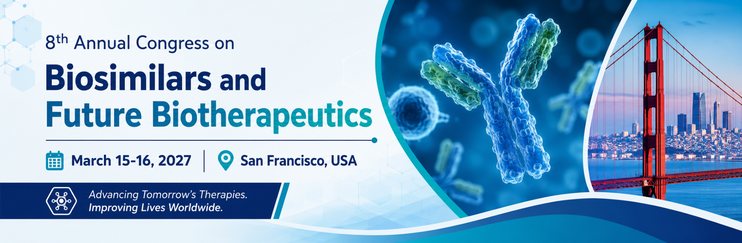
We are pleased to welcome you to the 8th Annual Congress on Biosimilars and Future Biotherapeutics, taking place on March 15–16, 2027, in the vibrant and innovative city of San Francisco, USA. This premier international gathering will bring together leading scientists, researchers, regulatory authorities, biopharmaceutical experts, clinicians, healthcare professionals, industry leaders, and policymakers to explore the evolving landscape of biosimilars and the future of biotherapeutic innovation.
With a strong focus on advancing the development, accessibility, affordability, and adoption of biologic medicines, the congress will provide a dynamic platform for meaningful discussions on the latest scientific discoveries, regulatory developments, clinical advances, and market trends shaping the global biosimilars industry.
The congress will address a broad range of topics, including biosimilar development and regulatory approval pathways, analytical and clinical comparability, immunogenicity, pharmacovigilance, interchangeability, biobetters, real-world evidence, manufacturing technologies, market access, healthcare economics, and patient-centric approaches to biologic therapies.
Key Highlights of the Conference
-
Renowned Keynote Speakers – Hear from leading scientists, regulatory experts, clinicians, industry executives, and thought leaders shaping the future of biosimilars and biotherapeutics.
-
Cutting-edge Research Presentations – Discover the latest advances through keynote lectures, plenary sessions, oral presentations, and poster sessions covering emerging scientific and clinical developments.
-
Interactive Workshops & Panel Discussions – Engage in expert-led workshops, case studies, and multidisciplinary panel discussions addressing regulatory, scientific, manufacturing, and commercial challenges.
-
Networking Opportunities – Build connections with researchers, healthcare professionals, industry representatives, investors, policymakers, and potential collaborators from around the world.
-
Industry & Innovation Showcase – Explore innovative technologies, manufacturing solutions, analytical platforms, digital tools, and emerging products presented by global biopharmaceutical companies, startups, and healthcare innovators.
-
Regulatory & Market Access Insights – Gain valuable perspectives on evolving global regulatory frameworks, interchangeability, pricing, reimbursement, healthcare economics, and strategies for increasing biosimilar adoption.
-
Future of Biotherapeutics – Explore next-generation biologics, novel therapeutic platforms, biobetters, advanced manufacturing approaches, and emerging technologies that are expected to transform the biopharmaceutical landscape.
Join us in San Francisco on March 15–16, 2027, for an inspiring exchange of scientific knowledge, innovative ideas, and global perspectives. Be part of the 8th Annual Congress on Biosimilars and Future Biotherapeutics and contribute to shaping the future of biologic medicines, biosimilar adoption, healthcare innovation, and equitable access to advanced therapies worldwide.
Sessions/Tracks
Track 1: AI-Driven Development and Manufacturing of Biosimilars
Explore the application of artificial intelligence and machine learning in biosimilar development, process optimization, and quality control. Discover how predictive modeling and data analytics can accelerate biosimilar characterization, improve manufacturing efficiency, and reduce development costs. Discuss emerging digital technologies shaping the future of biopharmaceutical production.
Track 2: Next-Generation Biologics and Advanced Biotherapeutics
Focus on innovative biologic medicines and advanced therapeutic approaches designed to address complex diseases. Examine developments in engineered proteins, novel biologic platforms, and targeted therapies. Highlight emerging technologies that improve therapeutic efficacy, safety, and patient outcomes.
Track 3: Interchangeability, Switching, and Immunogenicity of Biosimilars
Examine the scientific and clinical considerations associated with biosimilar interchangeability and switching from reference biologics. Explore immunogenicity assessment, safety monitoring, and treatment outcomes across different patient populations. Discuss evidence-based strategies to support clinical confidence and appropriate biosimilar utilization.
Track 4: Monoclonal Antibodies and Novel Therapeutic Antibody Engineering
Explore advances in monoclonal antibody development, antibody engineering, and targeted biologic treatments. Discuss innovative approaches to enhance binding specificity, therapeutic activity, and safety profiles. Highlight emerging antibody technologies for oncology, autoimmune disorders, and other complex diseases.
Track 5: Cell and Gene Therapies: Emerging Trends in Biotherapeutics
Discover recent advances in cell-based treatments, gene therapy platforms, and genetically engineered therapeutic products. Examine innovations in viral and non-viral delivery systems, manufacturing processes, and therapeutic safety. Discuss the challenges and opportunities associated with translating advanced therapies into clinical practice.
Track 6: Regulatory Science, Approval Pathways, and Global Harmonization of Biosimilars
Examine evolving regulatory frameworks and approval pathways governing biosimilars and biological medicines. Explore analytical comparability, clinical evaluation, quality assurance, and post-marketing surveillance requirements. Discuss international regulatory harmonization and strategies for improving global access to safe, effective, and affordable biologic therapies.
Track 7: Real-World Evidence and Clinical Outcomes of Biosimilar Adoption
Investigate real-world evidence supporting the effectiveness, safety, and long-term use of biosimilars. Explore observational studies, patient registries, pharmacovigilance data, and healthcare outcomes. Discuss how real-world findings can inform clinical decision-making, healthcare policies, and confidence in biosimilar treatments.
Track 8: Precision Medicine and Personalized Biologic Therapies
Explore the integration of precision medicine, biomarkers, and molecular profiling into biologic treatment strategies. Examine how patient-specific characteristics can guide therapeutic selection and improve treatment responses. Highlight emerging opportunities in personalized biologics, precision immunotherapy, and individualized disease management.
Track 9: Continuous Bioprocessing and Advanced Manufacturing Technologies
Focus on innovative manufacturing technologies designed to improve the quality, scalability, and consistency of biosimilars and biotherapeutics. Explore continuous bioprocessing, single-use systems, process analytical technologies, and automated production platforms. Discuss strategies for optimizing productivity, reducing manufacturing costs, and maintaining regulatory compliance.
Track 10: Emerging Biotherapeutics: ADCs, Bispecific Antibodies, and Protein Degraders
Examine emerging therapeutic platforms, including antibody–drug conjugates (ADCs), bispecific antibodies, and targeted protein degradation technologies. Explore their mechanisms of action, development challenges, and potential clinical applications. Highlight advances in targeted treatment strategies for cancer, immune-mediated disorders, and other challenging diseases.
Market Analysis
The global biosimilars and future biotherapeutics market is expanding rapidly, driven by the growing demand for affordable biologic therapies, patent expirations of major biologics, and increasing healthcare expenditure. Biosimilars are gaining significant adoption in oncology, autoimmune diseases, diabetes, and chronic conditions, creating opportunities to reduce treatment costs and improve patient access.
Europe remains a leading biosimilar market due to established regulatory frameworks and strong adoption, while North America continues to grow with increasing approvals and market competition. Asia-Pacific is expected to be one of the fastest-growing regions, supported by expanding healthcare infrastructure and strong manufacturing capabilities in countries such as India and China.
Emerging trends include biobetters, bispecific antibodies, fusion proteins, advanced monoclonal antibodies, cell and gene therapies, AI-driven drug development, and innovative manufacturing technologies. Strategic partnerships, licensing, and collaborations are also accelerating industry growth.
Despite strong opportunities, challenges remain, including complex manufacturing, regulatory requirements, patent barriers, pricing pressures, and concerns regarding interchangeability and long-term safety. Overall, the market is transforming the global biologics landscape by improving affordability, expanding access, and driving innovation in next-generation biotherapeutics.